Hábitos tróficos de dos especies sintópicas de carácidos en una quebrada de alta montaña en los Andes de Colombia
 Cristian Román-Palacios and Cesar Román Valencia
Abstract
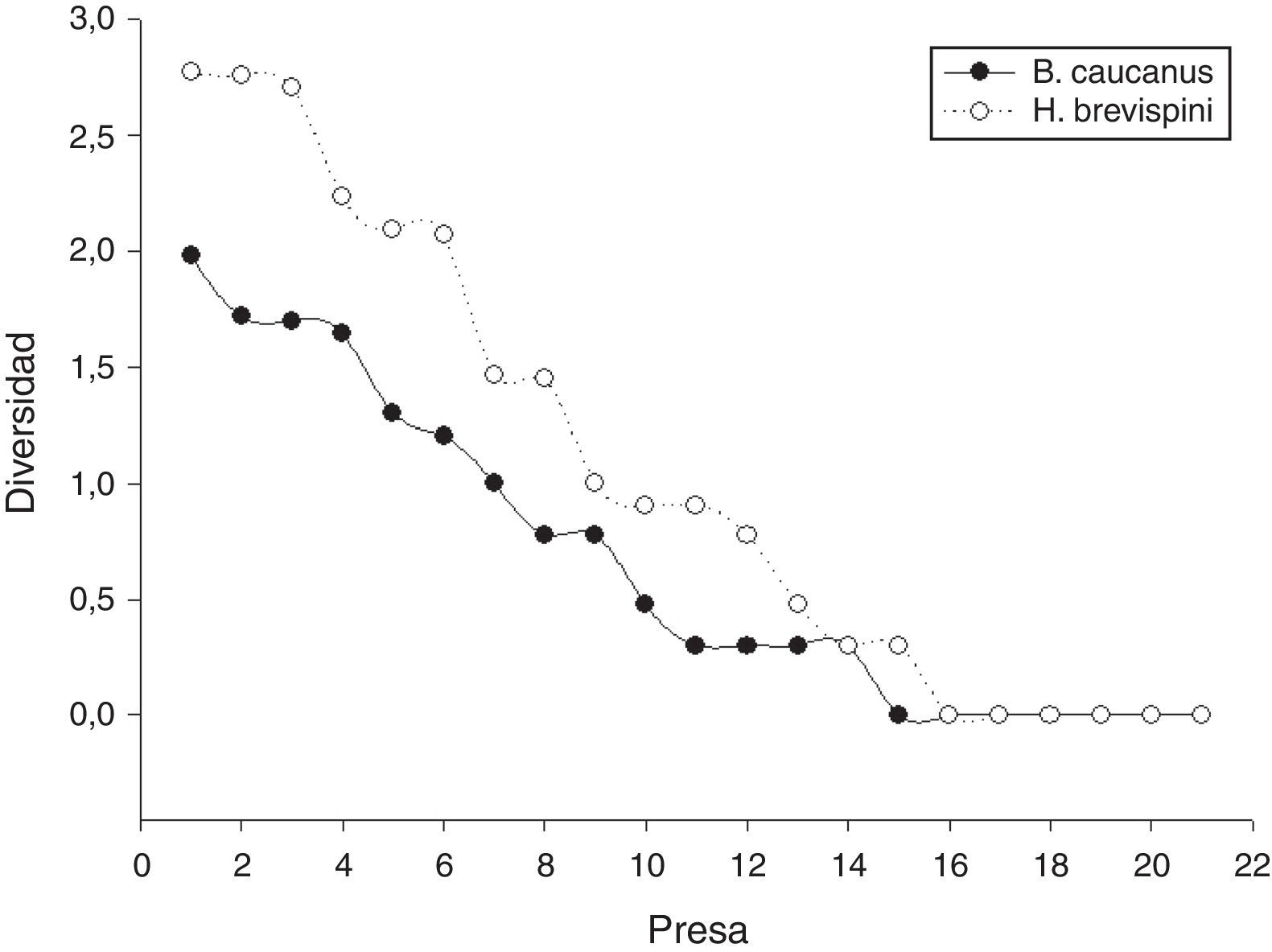
To analyze the degree of trophic overlap, 2 species of Neotropical characins were considered: Hemibrycon brevispini and Bryconamericus caucanus. Both species have been identified as having an insectivorous diet with a tendency to consume mayflies, hymenopterans, and dipterans. It was found that these fish share 65% of food items, which is reflected in their high trophic overlap (QS = 0.620). There is also no difference between the abundances of prey consumed. The values of trophic breadth, diversity, evenness, and richness were higher in B. caucanus than in H. brevispini, which explains the ecological flexibility exhibited by B. caucanus throughout its wide range of geographical distribution compared to H. brevispini. In these taxa, syntopy is mainly due to the high abundance of resources available during the year