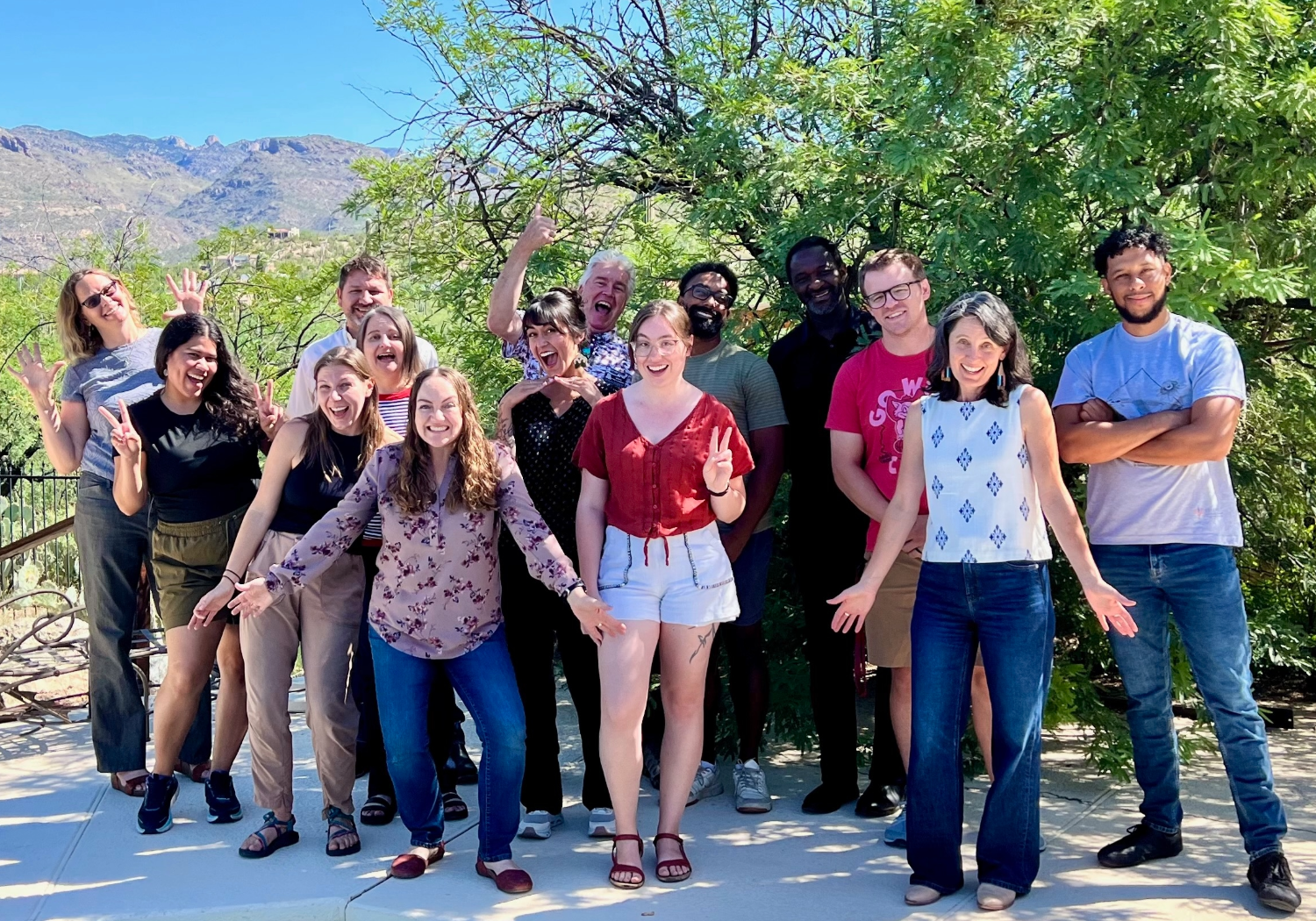
The Data Diversity Lab started in 2023 at the University of Arizona. It is led by Dr. Cristian Román-Palacios, an ecologist and evolutionary biologist who uses bioinformatics and machine learning on big datasets to answer long-standing questions in biology.
Our papers on evolution, conservation, ecology, biostatistics, and climate change have appeared in PNAS, Proceedings B, Evolution, Journal of Biogeography, Evolution Letters, and Global Ecology and Biogeography.
Ongoing projects in bioinformatics, phylogenetics, and local extinctions reveal what shapes evolutionary relationships.
Ongoing projects in general bioinformatics, phylogenetics, and local extinctions reveal the factors behind evolutionary relationships and explore the implications of climate change on biodiversity and its structures. We encourage students interested in biology to join us and bring their own ideas toward an official lab project.
Machine learning
We build machine learning methods for biology and environmental science, from climate trends to extinction forecasts.
We develop machine learning methods for applications from biology to environmental science. You can contribute to building new algorithms while applying them to real challenges, like predicting climate trends and their implications for biodiversity, and forecasting species extinction.
Data science
Data science is the backbone of our work, from biological data to large and messy datasets.
Data science is the backbone of our research, whether analyzing biological data, predicting the patterns behind species extinctions, or extracting meaning from large, messy datasets. Join our data science team to help continue this work.
Diversity, inclusion and social justice
These are part of how we work, from supporting underrepresented students to addressing social disparities.
Diversity and inclusion are part of our lab's DNA rather than a separate initiative. We believe diverse perspectives drive the research of the future, and lab members participate in work that empowers these efforts, from supporting underserved and underrepresented students to addressing social disparities through interdisciplinary approaches.
Climate change
It runs through all our aims, from biodiversity impacts to conservation efforts.
Climate change is a critical issue that intersects all of our research aims. We work on projects exploring its impact on biodiversity and supporting environmental conservation efforts.